
On April 7, China’s National Development and Reform Commission (NDRC) announced a new fuel pricing adjustment aimed at cushioning the impact of rising global oil prices on the domestic economy.
According to the official mechanism, gasoline and diesel prices were supposed to increase by RMB 800/ton and RMB 770/ton respectively. However, after government intervention, the actual increase was limited to RMB 420/ton and RMB 400/ton.
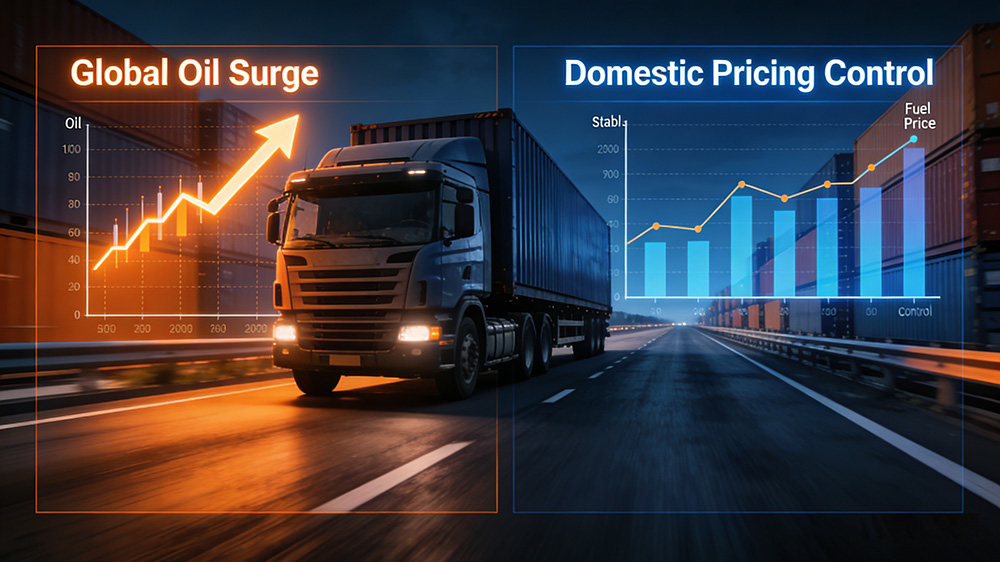
This policy move highlights a critical reality:
Fuel costs are rising globally—but China is actively smoothing the impact domestically.
So what does this mean for the freight forwarding industry?
- Cost Pressure Is Real — But Temporarily Contained
Fuel is a core cost driver across all logistics segments:
- Trucking (drayage & inland delivery)
- Container yard operations
- Last-mile distribution
Without government intervention, the cost surge would have been significantly higher. The controlled adjustment effectively:
- Reduces immediate cost spikes
- Buys time for logistics companies to adapt
- Prevents sudden supply chain disruptions
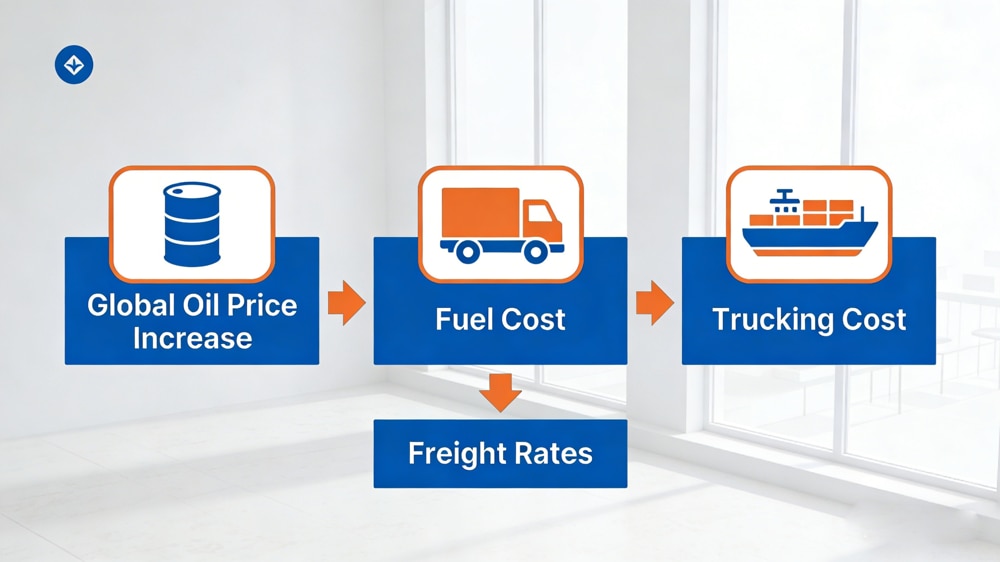
However, this is not a cost elimination—just a delay and reduction of impact.
- Trucking Rates Will Continue to Rise Gradually
Even with partial price controls, the increase still translates into higher operating costs for carriers.
In practical terms:
- Many trucking companies have already implemented 5–10% rate increases
- More adjustments are likely if oil prices remain elevated
- Short-haul and port drayage will be the first to reflect changes
Key takeaway:
Expect a gradual upward adjustment, not a sudden spike.
- Freight Rate Volatility Will Increase
This type of policy creates a “buffered volatility” environment:
- International oil prices fluctuate sharply
- Domestic fuel prices adjust more slowly
- Logistics costs move in stepwise increments rather than real-time
For freight forwarders, this means:
- Quoting becomes more complex
- Validity periods may need to be shortened
- Risk management becomes more important