
Every peak shipping season, importers ask the same question:
“If ships are still sailing and containers are still available, why have freight rates increased so much?”
At first glance, it seems confusing.
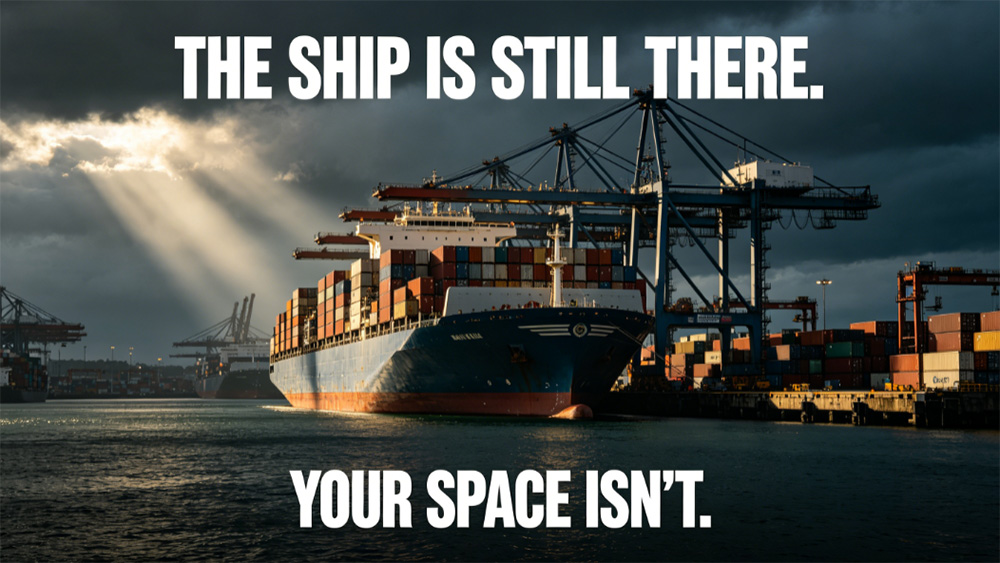
The vessels haven’t disappeared.
The containers haven’t disappeared.
Ports are still operating.
Yet freight rates rise, bookings become difficult, and shipments face delays.
The reason is simple:
In ocean freight, the problem is often not the availability of containers—it is the availability of space.
Understanding What “Space” Really Means
When people think about ocean shipping, they often focus on containers.
They imagine that as long as a shipping line has containers available, moving cargo should be easy.
However, containers are only part of the equation.
A shipping line may have thousands of containers available, but each vessel has a limited amount of space.
Once that space is sold, additional cargo must wait for another sailing.
In other words:
The container may exist.
The ship may exist.
But the available slot on that ship may already be gone.
Why Space Becomes Limited
During normal market conditions, most importers can book shipments without major issues.
Peak season changes everything.
At certain times of the year, demand surges dramatically.
Common causes include:
- Holiday inventory replenishment
- Back-to-school season
- Promotional campaigns
- E-commerce sales events
- Year-end inventory planning
- Seasonal retail demand
When thousands of businesses try to move cargo simultaneously, vessel space fills much faster than usual.
The Impact of High Demand
As available space decreases, several things begin to happen.
Freight Rates Increase
Ocean carriers adjust pricing based on supply and demand.
When demand exceeds available space, rates typically rise.
This is why freight costs can change significantly within a short period.
Booking Competition Intensifies
Importers may compete for the same vessel departures.
The most desirable sailings often fill first.
Cargo Rollovers Become More Common
A rollover occurs when cargo does not make the intended vessel and is moved to a later sailing.
This can happen even when cargo arrives at the port on time.
The reason is simple:
There is not enough space available on the vessel.
Transit Planning Becomes More Difficult
Limited space often creates uncertainty for inventory planning and delivery schedules.
Businesses may struggle to predict arrival dates accurately.
Why Waiting Can Become Expensive
Many importers do not begin arranging transportation until production is complete.
The conversation often sounds like this:
“The cargo is ready. Can we ship next week?”
Unfortunately, by the time production finishes, the market may have changed significantly.
Available space may already be limited.
Freight rates may have increased.
Preferred sailings may already be full.
This often results in:
- Higher transportation costs
- Longer transit times
- Inventory shortages
- Missed sales opportunities
What Experienced Importers Do Differently
Companies with mature supply chains understand that logistics planning starts long before cargo is finished.
Rather than waiting for production completion, they often:
Forecast Shipping Needs Early
Demand planning helps identify future transportation requirements before peak season arrives.
Reserve Space in Advance
Early bookings typically provide more options and greater schedule flexibility.
Coordinate Production and Logistics
Production schedules and shipping schedules should work together rather than independently.
Monitor Market Conditions
Freight markets change constantly.
Businesses that track capacity trends can make better shipping decisions.
The Cost of Missing Space
When vessel space becomes scarce, the consequences often extend beyond freight costs.
Potential impacts include:
- Delayed inventory replenishment
- Missed seasonal sales opportunities
- Increased warehousing expenses
- Customer dissatisfaction
- Supply chain disruptions
For many businesses, these indirect costs can be far more significant than the transportation cost itself.
Final Thoughts
Ocean containers rarely disappear.
Ships continue sailing.
Ports continue operating.
What changes is the amount of available space within the transportation network.
When demand rises, available capacity can disappear quickly.
This is why successful importers focus not only on freight rates but also on timing, forecasting, and capacity planning.
Because in international logistics, the biggest challenge is often not finding a container.
It’s finding space inside one.