The European Commission is proposing a major overhaul of EU public procurement rules—and Chinese suppliers could face a much tougher market.
Under the proposal announced on September 9, European public authorities would have clearer legal grounds to favor European suppliers and restrict access for companies from countries that do not provide reciprocal access to their own public procurement markets.
The proposal covers a huge market.
Public procurement represents roughly 15% of EU GDP, covering everything from infrastructure and transportation to hospitals, schools, energy and public-sector technology.
This is bigger than tariffs.
Trade protection is increasingly moving beyond:
Tariffs → Quotas → Procurement → Technology → Supply Chain Security
For Chinese manufacturers, winning an EU government contract may become more difficult even when their products remain legally available in the private market.
And this is not entirely new.
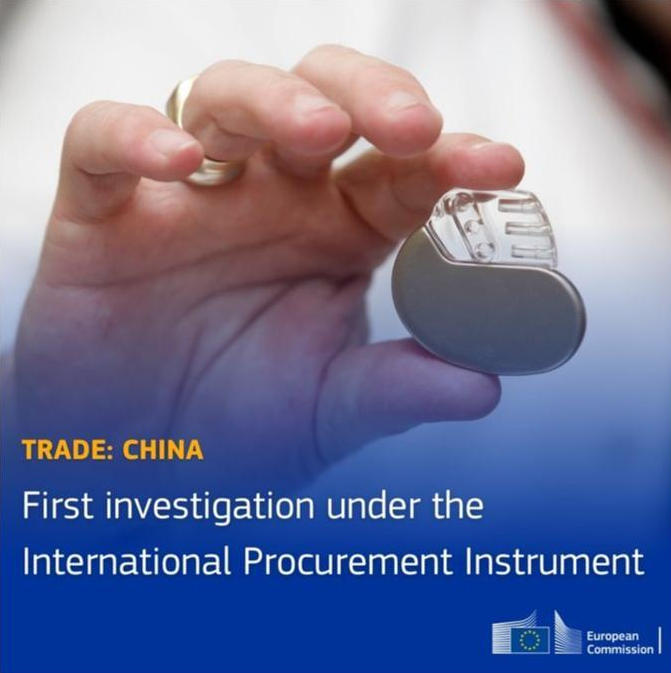
The EU has already used its International Procurement Instrument (IPI) to restrict Chinese participation in certain medical-device tenders above €5 million, following an investigation into barriers faced by European companies in China’s public procurement market.
What should Chinese exporters watch?
For companies selling into Europe, especially in:
- Infrastructure
• Transportation
• Medical equipment
• Energy
• ICT and technology
• Industrial equipment
• Construction
the question may increasingly be not only:
“Can we sell this product in Europe?”
but also:
“Can we participate in European public procurement?”
This creates a new layer of market-access risk.
A product can remain commercially competitive while becoming less competitive—or even ineligible—in certain government tenders.
The bigger picture
Europe is increasingly treating public procurement as a strategic industrial policy tool.
The goal is not simply to obtain the lowest price.
It is increasingly about:
European industry + supply-chain resilience + economic security + strategic autonomy
For exporters, this means that market access can no longer be separated from trade policy.
The next phase of global trade may not be defined only by tariffs at the border.
It may also be decided before the order is placed.
The new trade barrier may not always be a tariff. Sometimes, it is the tender itself.