Your goods are manufactured. The supplier has finished packing. Your freight booking is confirmed, and your customer is waiting for delivery.
Then someone discovers that a required document is missing.
It might be an incomplete commercial invoice, a packing list that does not match the cargo, a missing import permit, or a product-specific certificate that should have been arranged earlier.
The document itself may be only a few pages. But the consequences of missing it can extend far beyond the paperwork.
Every missing document has a potential price—and that price is often measured in time, money, and disrupted business plans.
For businesses importing from China, understanding which documents are required, who is responsible for preparing them, and when they must be available is an important part of managing a reliable supply chain.
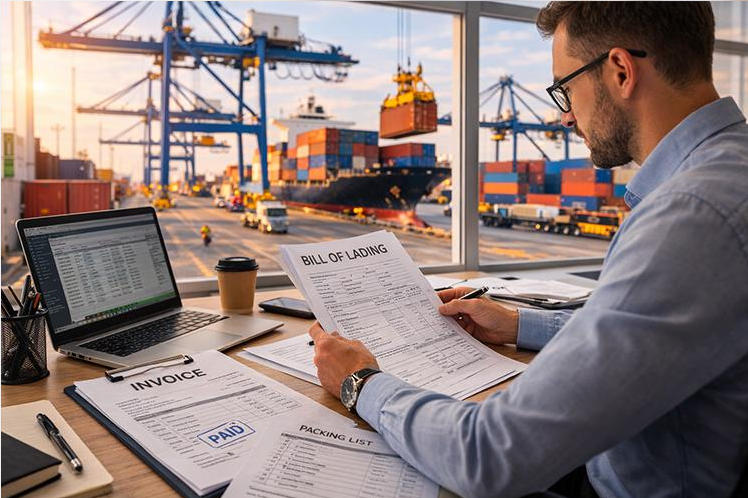
- Why Missing Shipping Documents Can Become Expensive
Not every missing document causes a shipment delay. The consequences depend on the document, the product, the destination country, and the stage of transportation.
However, when a document is required for customs clearance, regulatory approval, cargo release, or delivery, its absence can create several problems.
Customs clearance may take longer
Customs authorities may request additional information or supporting documents before making a decision on a shipment.
For example, a vague product description may require clarification. A transaction that needs additional valuation evidence may require supporting records. Certain regulated products may require permits or certificates before they can be imported.
Until the relevant issue is resolved, clearance or release may be delayed.
Additional charges may arise
A delayed shipment can create costs beyond the original freight quotation.
Depending on the circumstances and the applicable terms, these may include:
- Port or terminal storage charges
- Container demurrage or detention charges
- Additional handling or examination-related costs
- Warehouse storage or rescheduling fees
- Extra administrative work to correct or replace documents
These charges are not automatic consequences of every documentation problem. They depend on the location, shipment arrangements, free-time terms, service providers, and duration of the delay.
The important point is that a documentation issue can become a logistics cost when it prevents the next stage of the shipment from proceeding.
Delivery plans may need to change
Importers often coordinate several activities around an expected arrival date: warehouse appointments, inventory replenishment, production schedules, distribution, and customer orders.
If clearance or cargo release is delayed, trucking arrangements may need to be rescheduled. Warehouse appointments may be missed. Inventory may not become available when expected.
For seasonal products, the commercial impact can be particularly significant. A shipment arriving after the peak selling period may have less value to the business, even if the products themselves are undamaged.
- The Essential Shipping Documents Importers Should Understand
There is no universal document list for every international shipment. Requirements depend on the product, the country of origin, the destination, the transport method, and any applicable regulatory controls.
Nevertheless, importers should understand the purpose of several commonly used documents.
Commercial Invoice
The commercial invoice records key transaction details, including the seller, buyer, goods, quantities, prices, and other relevant information.
It is an important source of information for customs valuation and declaration preparation.
Common problems include vague product descriptions, incorrect quantities, inconsistent prices, or missing transaction details.
What to check: Make sure the invoice accurately reflects the actual transaction and goods being shipped. Confirm that the information is sufficient for the relevant customs requirements.
Packing List
The packing list describes how the shipment is packed. Depending on the shipment, it may include carton counts, package contents, gross and net weights, and dimensions.
It helps logistics providers and relevant authorities understand the physical cargo.
Problems can arise when the packing list does not match the final packing arrangements—for example, when the supplier changes carton quantities after preparing the original document.
What to check: Request the final packing information after packing is complete, and confirm that the quantities, package counts, and measurements are accurate.
Bill of Lading or Air Waybill
These transport documents record key information about the shipment and the parties involved in the transportation.
The bill of lading is commonly used for ocean freight, while the air waybill is used for air freight. Their functions and release procedures differ.
Incorrect consignee details, inconsistent shipment information, or problems with the applicable release procedure can complicate cargo release and delivery.
What to check: Confirm the relevant shipper, consignee, destination, and cargo details with the responsible logistics provider before the document is finalized.
Certificate of Origin
A certificate of origin may be required to establish the origin of goods for a particular trade or regulatory purpose.
Depending on the destination and applicable trade arrangements, origin information can affect eligibility for preferential tariff treatment or compliance with other import requirements.
Not every shipment requires a certificate of origin, and the required format or issuing process can vary.
What to check: Determine whether a certificate is needed, what form is acceptable, and whether the goods qualify for any claimed origin-related treatment.
Import Permits and Product-Specific Certificates
Certain products may be subject to additional import controls or documentation requirements.
Depending on the goods and destination, these can include permits, safety or conformity documentation, sanitary or phytosanitary certificates, testing records, or other approvals.
The requirement may depend on the product’s composition, intended use, technical specifications, or regulatory classification.
What to check: Identify applicable product requirements before placing the order or arranging shipment. Do not assume that a product can be imported simply because the supplier can manufacture and export it.
- Four Common Documentation Mistakes That Can Delay Shipments
Many documentation problems begin well before the cargo reaches the destination port.
Mistake 1: Preparing Documents Before the Final Packing Details Are Confirmed
A supplier may prepare an invoice and packing list using estimated quantities or dimensions. Later, the actual packing arrangement changes, but the original documents are not updated.
This can create discrepancies between the paperwork and the cargo.
Better approach: Confirm final packing details before the relevant documents are issued or finalized. If the cargo changes afterward, determine which documents need to be updated.
Mistake 2: Copying Information From a Previous Shipment
Using an earlier shipment as a template can save time, but copying the details without verification can carry forward old errors.
The new shipment may contain different products, quantities, materials, consignee details, or regulatory requirements.
Better approach: Use previous documents as templates only. Verify every material detail against the current transaction and shipment.
Mistake 3: Assuming the Supplier Is Responsible for Every Import Document
Suppliers generally provide information and documents relating to the goods and export transaction. However, the importer, freight forwarder, customs broker, carrier, and relevant authorities may each have different responsibilities.
A supplier may not know every requirement in the destination country. Conversely, a freight forwarder may not have authority to issue a product certificate or determine whether a regulated product meets import requirements.
Better approach: Assign responsibility for each required document before production or shipment begins. Confirm who prepares it, who reviews it, and who must receive it.
Mistake 4: Waiting Until the Cargo Arrives to Check Requirements
Some permits, approvals, or product-specific documents may need to be obtained before shipment or before the goods can be released.
Discovering the requirement after the cargo has departed may leave fewer options and less time to resolve the issue.
Better approach: Review destination-country requirements early, particularly for regulated products, unfamiliar goods, or first-time imports.
- The Real Cost of a Missing Document: A Practical Example
Imagine an importer has a shipment of household products arriving at a destination port.
The goods are ready for delivery, but an outstanding document is required before the shipment can proceed through the relevant clearance or release process.
The importer must contact the supplier, obtain the missing information, coordinate with the responsible broker, and wait for the issue to be resolved.
During that period, several costs may emerge:
| Cost category | Possible business impact |
| Storage | Cargo or containers may incur storage charges if applicable free time expires. |
| Container-related charges | Demurrage or detention may apply depending on the equipment, location, and terms. |
| Delivery rescheduling | Trucking or warehouse appointments may need to be changed. |
| Administrative work | Staff and service providers spend additional time resolving the issue. |
| Inventory disruption | Products may become available later than planned. |
The financial impact will vary from shipment to shipment. It would be misleading to assign a fixed penalty to every missing document.
But the broader lesson is clear: the cost of a documentation problem can extend well beyond the cost of preparing the document itself.
A simple document review before departure may help prevent an avoidable issue from becoming a larger operational problem.
- How to Build a Pre-Shipment Document Checklist
A repeatable process is more reliable than relying on memory or last-minute messages.
Before cargo leaves China, importers should work with their suppliers and logistics partners to complete the following checks.
Step 1: Identify the Product and Destination Requirements
Start with the actual product—not just the supplier’s general description.
Confirm what the goods are, what they are made of, how they will be used, and where they will be imported. Determine whether the product is subject to permits, special certificates, or other regulatory requirements.
Step 2: Create a Document Responsibility List
Record each required document, the person or organization responsible for preparing it, and the deadline for completion.
For example:
- Supplier: product specifications, commercial invoice, and packing information as applicable
- Importer: purchase records, relevant transaction information, and permits or approvals assigned to the importer
- Freight forwarder or carrier: transport documentation and shipment coordination within their respective roles
- Customs broker: preparation or submission of customs entry information within the agreed scope of service
The exact allocation depends on the transaction and service agreement. The goal is to ensure that no required task is left unassigned.
Step 3: Check Accuracy and Consistency
Review the documents together rather than checking each one in isolation.
Confirm that product descriptions, quantities, weights, package counts, party details, and other relevant information are accurate and consistent where they should match.
Any legitimate difference should be understood and properly documented.
Step 4: Confirm Timing
A document that arrives too late may still disrupt the shipment even if its contents are correct.
Establish when each document must be ready—for example, before export clearance, before arrival, or before an applicable import approval or cargo release deadline.
Do not assume every document follows the same deadline. Confirm the requirements for the particular shipment.
Step 5: Keep a Complete Record
Retain the final versions of relevant shipping and transaction documents, along with supporting records and important communications.
A well-organized record helps resolve questions, manage amendments, and support future shipments.
- Why Documentation Is Part of Logistics Planning
International shipping is a sequence of connected activities: cargo preparation, export procedures, transportation, import clearance, cargo release, and final delivery.
Each stage depends on information being available when needed.
If an essential document is missing, the cargo may be physically ready to move while the shipment is not administratively ready to proceed.
That is why logistics planning should begin before the goods leave the factory. Document requirements, cargo details, transportation arrangements, and destination delivery requirements should be coordinated as part of the same process.
For importers shipping from China to the United States, Canada, or other markets, the specific requirements will vary. A freight forwarder can help coordinate shipment information and transportation documentation, while a qualified customs broker or relevant regulatory specialist can advise on applicable import declarations and product requirements.
Importers should also understand their own responsibilities under destination-country law.
Final Thoughts: Don’t Let One Missing Document Disrupt the Entire Shipment
A missing document may seem like a small administrative problem. But when that document is essential to clearance, regulatory approval, or cargo release, the consequences can extend to storage costs, rescheduled delivery, and delayed inventory.
The solution is not to collect every possible document for every shipment. It is to identify the documents actually required, prepare them accurately, assign responsibility, and confirm that they will be available at the right time.
The best time to discover a missing document is before your cargo ships—not when your shipment is waiting for clearance.
At TD Logistics, we believe effective shipping requires coordination beyond transportation alone. Early preparation, accurate shipment information, and clear communication can help importers reduce preventable disruptions and manage their supply chains more effectively.