
A Deeper Look at the “Manufacturing Comeback” in Guangdong, Zhejiang, and Jiangsu
Over the past few months, a common phrase has started circulating again in global trade circles:
“Orders are flowing back to China.”
From freight forwarders in Shenzhen to factory owners in Dongguan and Ningbo, many businesses are noticing the same signals:
- Busier warehouses
- Rising container demand
- Tighter vessel space
- More RFQs from overseas buyers
- Increased production schedules at export-oriented factories
Some even describe ports in South China and the Yangtze River Delta as:
“busy enough to smoke.”
But is this truly a large-scale return of manufacturing to China?
Or is something deeper happening inside the global supply chain?
The reality is more nuanced — and far more interesting.
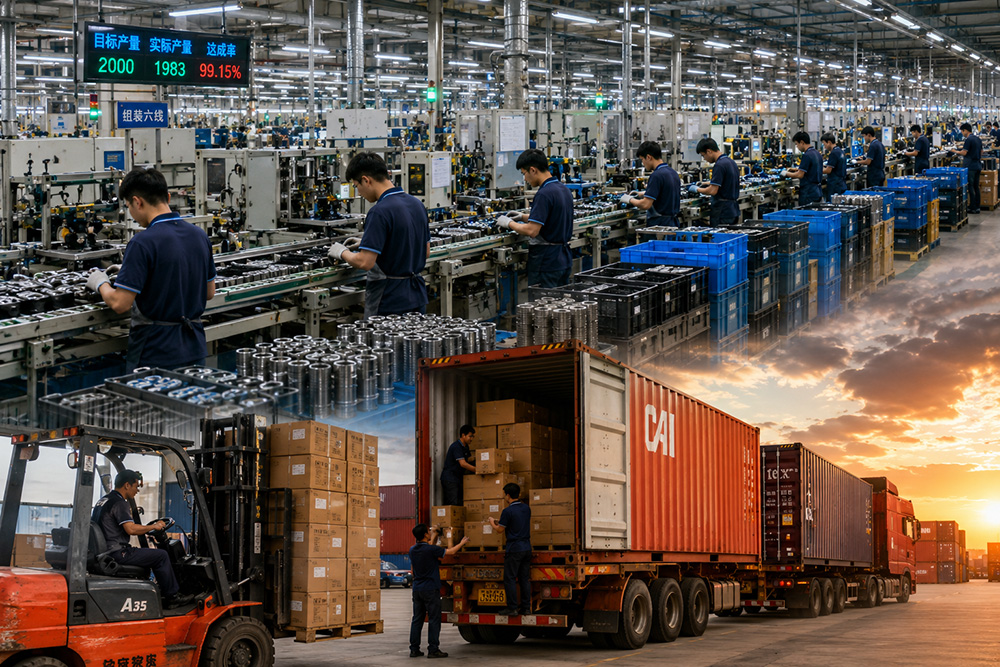
The Global Manufacturing Shift Never Fully Left China
Over the past five years, many Western companies aggressively pursued a strategy often called:
“China Plus One”
The idea was simple:
- Keep some production in China
- Move part of manufacturing to countries like Vietnam, India, Indonesia, or Mexico
The motivations were clear:
- Rising labor costs in China
- U.S.-China tariffs
- Geopolitical concerns
- Pandemic-era supply chain disruptions
At one point, headlines suggested that:
“The world is moving manufacturing out of China.”
But global manufacturing is not as easy to relocate as PowerPoint presentations make it appear.
The Biggest Misunderstanding: Manufacturing Is Not Just Cheap Labor
Many people outside the industry assume factories can simply “move” from one country to another.
In reality, modern manufacturing depends on an entire ecosystem.
China’s real advantage is not merely low cost.
It is:
- Supply chain density
- Industrial clustering
- Logistics efficiency
- Skilled labor
- Supplier responsiveness
- Infrastructure scale
For example, in Guangdong:
- Packaging suppliers
- Mold makers
- Hardware factories
- Printing companies
- Foam manufacturers
- Trucking providers
- Export warehouses
- Ports
can all exist within a few hours of each other.
This creates something extremely difficult to replicate:
Manufacturing speed.
A factory in Dongguan can modify a product design in the morning and receive updated packaging samples by evening.
In many emerging manufacturing markets, that same process may take days or weeks.
Southeast Asia and India Are Facing Structural Constraints
Countries such as Vietnam and India have indeed attracted significant foreign investment.
However, rapid growth has exposed major infrastructure limitations.
- Power Supply Instability
One of the biggest operational risks in developing manufacturing hubs is electricity reliability.
Some regions continue to face:
- Rolling blackouts
- Grid instability
- Seasonal power shortages
- Industrial energy rationing
For export manufacturing, downtime is expensive.
Global buyers care less about where products are made and more about:
- Delivery consistency
- Production reliability
- Quality control
Late shipments can damage entire retail seasons.
As a result, many importers are reconsidering whether lower labor costs truly offset operational uncertainty.
- Incomplete Supplier Networks
Many factories outside China still depend heavily on Chinese upstream suppliers.
For example:
- Raw materials
- Components
- Packaging
- Machinery
- Industrial chemicals
- Spare parts
often still originate from China.
This creates a paradox:
Some “non-China manufacturing” still relies on China.
In many cases, factories in Southeast Asia are assembling products using Chinese-made intermediate goods.
That means when disruptions occur, production delays can spread quickly.
- Scaling Too Fast Creates Operational Stress
Several emerging manufacturing regions expanded rapidly after 2020.
But rapid industrial growth can strain:
- Roads
- Ports
- Customs systems
- Labor availability
- Housing
- Electricity grids
As order volumes increased, some overseas factories struggled with:
- Higher defect rates
- Longer lead times
- Worker turnover
- Port congestion
For some buyers, the savings no longer justified the complications.
Why Buyers Are Returning to Chinese Suppliers
The recent return of some orders to China is not purely about price.
It is increasingly about:
- Stability
- Predictability
- Execution capability
Many importers now realize:
The cheapest production location is not always the lowest total cost.
A delayed shipment can cost more than higher factory pricing.
A poor-quality batch can erase months of savings.
This is especially true in industries such as:
- Furniture
- Home goods
- Kitchenware
- Machinery
- Automotive parts
- Electronics accessories
- Cross-border e-commerce products
These industries require:
- Fast replenishment
- Reliable QC
- Flexible production
- Tight delivery schedules
China remains exceptionally strong in all four.
Ports Are Getting Busy Again — But This Is Not 2021
Chinese ports including:
- Shenzhen
- Ningbo
- Shanghai
- Qingdao
have recently seen stronger cargo activity.
Freight forwarders are reporting:
- More container bookings
- Rising inquiries
- Increased warehouse turnover
- Tightening vessel space on some routes
Several factors are contributing:
- U.S. and European inventory restocking
- Seasonal purchasing cycles
- Concerns over future tariffs
- Importers locking in shipments early
However, this does not necessarily mean a full manufacturing boom has returned.
The market today is very different from the pandemic-era surge.
Back then:
- Consumer demand exploded
- Freight rates skyrocketed
- Global supply chains were frozen
Today’s recovery is more selective and cautious.
Not All Industries Are Benefiting Equally
One important reality:
China’s manufacturing recovery is uneven.
Industries showing stronger momentum include:
- Furniture
- Home appliances
- Solar-related products
- Industrial equipment
- EV supply chains
- Automotive components
- E-commerce export products
Meanwhile, highly labor-intensive low-margin industries continue moving abroad, including:
- Low-end garments
- Basic assembly work
- Cheap toys
- Simple consumer goods
China is gradually shifting upward in the manufacturing value chain.
The Real Story: “Replacement” Has Become “Dependence Management”
Perhaps the most important shift is psychological.
A few years ago, many companies believed:
“China can be replaced.”
Today, many are realizing:
“China can be diversified away from — but not easily replaced.”
That is a very different conclusion.
Most multinational buyers are no longer pursuing total decoupling.
Instead, they are building:
- Dual sourcing strategies
- Regional backup production
- Supply chain redundancy
In other words:
“China Plus One” has survived.
But “Anything But China” has weakened considerably.
Final Thoughts
The current wave of order recovery in Guangdong, Zhejiang, and Jiangsu reflects more than short-term market demand.
It reveals a deeper truth about global manufacturing:
Efficiency, infrastructure, and industrial ecosystems matter more than headlines.
China still possesses:
- The world’s most complete industrial supply chain
- Massive export infrastructure
- High manufacturing flexibility
- Fast scaling capability
- Mature logistics networks
Those advantages took decades to build.
And despite global diversification efforts, they remain extraordinarily difficult to duplicate.
The result is not a dramatic “return of all orders.”
Rather, it is a growing recognition that:
Global manufacturing still depends heavily on China — especially when reliability matters most.