
Shipping from China can look simple:
Find a supplier → place an order → wait for production → book a shipment.
But international shipping involves much more than moving cargo from one country to another.
Before your goods leave the factory, there are several questions you should answer.
Asking the right questions early can help you avoid delays, unexpected charges, customs problems, and unnecessary freight costs.
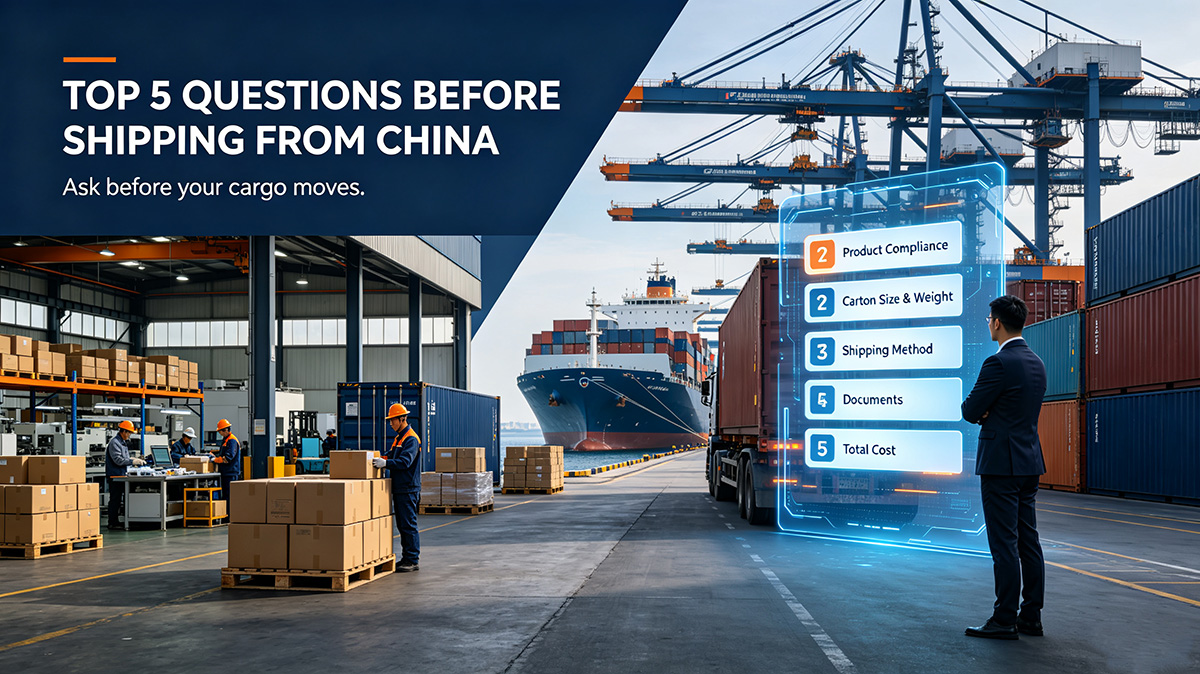
Here are five questions every importer should ask before shipping from China.
- Can My Product Be Shipped and Imported Legally?
This should be your first question—not the last.
Some products have special transportation or import requirements.
Examples include:
- Lithium battery products
- Electronics
- Food and supplements
- Cosmetics
- Children’s products
- Medical-related products
- Chemicals
- Branded merchandise
Depending on the product and destination country, you may need specific documentation, certifications, testing reports, or brand authorization.
Don’t wait until the cargo is ready to discover a compliance problem.
Check before production whenever possible.
- What Are the Final Carton Dimensions and Weight?
Many importers focus on the product itself and forget about the packaging.
That’s a mistake.
Freight costs can depend heavily on:
- Carton dimensions
- Gross weight
- Number of cartons
- Pallet configuration
- Total CBM
For air freight, volumetric weight can be particularly important.
For ocean freight, inefficient packaging can mean fewer products fitting into a container.
Before requesting a final freight quote, make sure you have realistic shipping specifications.
And remember:
You’re not only shipping products. You’re shipping the space occupied by their packaging.
- Which Shipping Method Makes the Most Sense?
There isn’t one “best” shipping method for every shipment.
Your decision may depend on:
- Cargo volume
- Cargo weight
- Delivery deadline
- Product characteristics
- Budget
- Destination
- Inventory requirements
For example:
Air freight may make sense for urgent or relatively small shipments.
LCL can work for smaller ocean shipments that don’t require a full container.
FCL may become more economical as cargo volume increases.
The cheapest transportation method isn’t necessarily the best option.
The right question is:
Which transportation solution best matches my cargo and business requirements?
- Are My Shipping and Customs Documents Ready?
Having cargo ready doesn’t necessarily mean having the shipment ready.
Your documentation should be prepared and reviewed before the goods move.
Depending on the shipment, this may include:
- Commercial invoice
- Packing list
- Bill of lading information
- Product certificates
- Origin documentation
- Other regulatory documents
The information should also be consistent.
Product descriptions, quantities, values, weights, and other details should accurately reflect the actual cargo.
A small documentation problem can become a much larger problem once the cargo is already in transit.
- What Is the Total Cost to My Door?
The freight rate is only one part of the transportation cost.
Before comparing quotes, ask:
“What exactly is included?”
Depending on the shipping arrangement, additional costs may include:
- Origin charges
- Ocean or air freight
- Destination charges
- Customs-related costs
- Port or terminal fees
- Trucking
- Delivery surcharges
- Storage or other potential fees
A quote that looks cheaper at first may not be cheaper after all costs are considered.
Instead of comparing only the headline freight rate, compare the total landed or delivered cost.
Why These Questions Matter
Most expensive shipping problems don’t suddenly appear at the port.
They often begin much earlier.
A product wasn’t checked for compliance.
Packaging wasn’t optimized.
The wrong shipping method was selected.
Documents weren’t prepared correctly.
Or additional destination charges weren’t considered.
By the time the problem becomes visible, fixing it may already be expensive.
That’s why good logistics planning starts before the cargo moves.
Final Thoughts
Before shipping from China, don’t ask only:
“How much is the freight?”
Ask:
Can I legally ship this product?
How much space will it actually take?
Which shipping method is right for my shipment?
Are my documents ready?
What will the shipment really cost from factory to destination?
The more questions you answer before shipping, the fewer surprises you’re likely to encounter later.
Because the best time to solve a shipping problem is usually before the cargo leaves the factory.