
President Donald Trump has repeatedly argued that more iPhones should be made in the United States.
At first glance, the idea sounds straightforward: if tariffs make overseas manufacturing more expensive, companies such as Apple will have a stronger incentive to bring production back to America.
But there is a fundamental problem with this logic:
Manufacturing is not simply a factory that can be moved from one country to another.
For a product as sophisticated as the iPhone, manufacturing is an entire ecosystem.
And that distinction matters.
The iPhone Is More Than a Factory
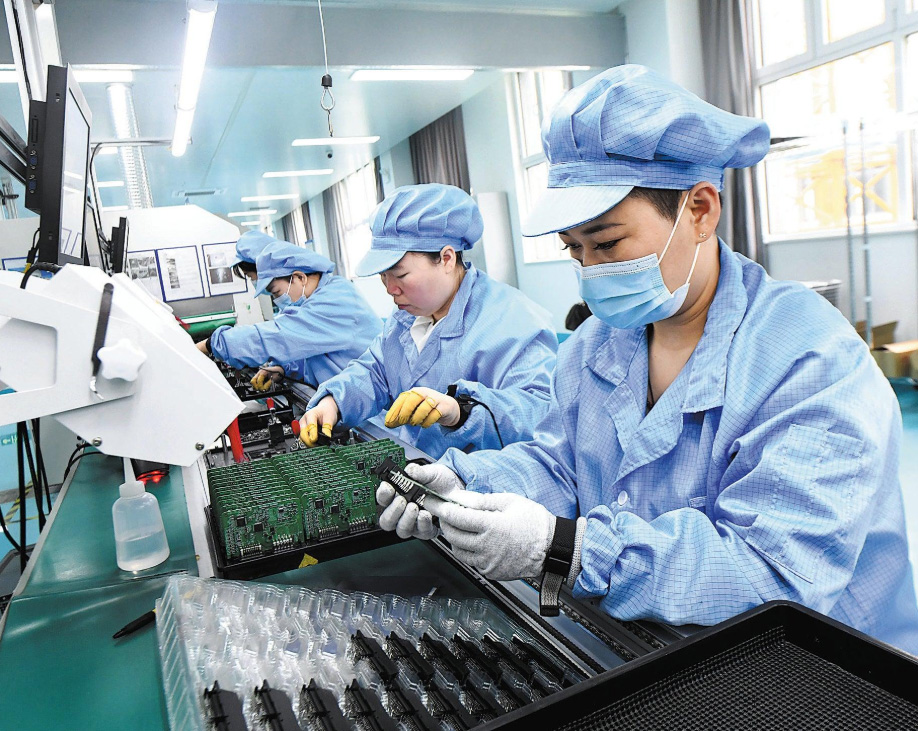
An iPhone requires an enormous network of suppliers and manufacturing capabilities, including:
- Semiconductors
- OLED displays
- Camera modules
- Batteries
- Printed circuit boards
- Connectors
- Precision metal components
- Glass
- Molds and tooling
- SMT and electronics assembly
- Final assembly and testing
The final assembly plant is only one part of this network.
Around it are thousands of suppliers, engineers, equipment manufacturers, logistics providers and specialized factories.
This is one of the biggest advantages of China’s manufacturing ecosystem.
Moving final assembly to another country is possible.
Recreating the entire ecosystem is much harder.
China’s Advantage Is No Longer Just Cheap Labor
One of the most common arguments for moving manufacturing back to the United States is that Chinese production relies primarily on inexpensive labor.
That explanation is increasingly outdated.
China’s manufacturing advantage comes from a combination of:
Supplier density + engineering expertise + production scale + tooling capabilities + skilled labor + logistics infrastructure + manufacturing speed.
Imagine that an engineer discovers a problem with a component during production.
In a highly concentrated manufacturing ecosystem, the supplier, tooling company, engineers and assembly plant can often coordinate extremely quickly.
This is a form of manufacturing network effect.
The value is not simply in the cost of one worker.
It is in the ability of thousands of companies to work together efficiently.
Could Apple Move More Production Out of China?
Absolutely.
And Apple is already pursuing this type of strategy.
But the more realistic strategy is not:
China → United States
It is:
China + 1
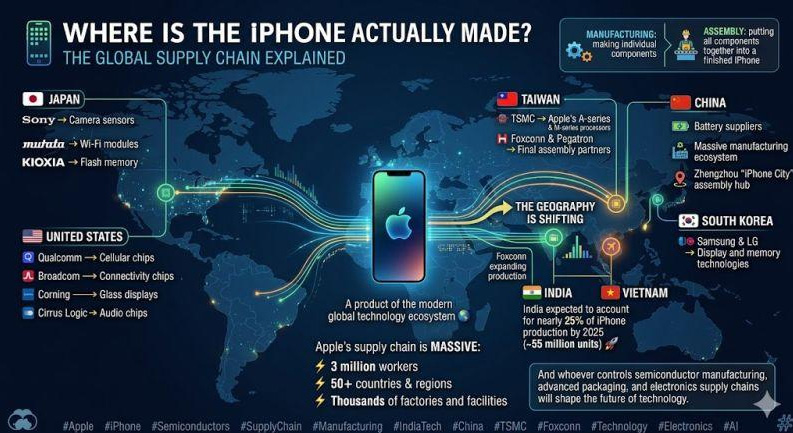
Apple has been expanding production in countries such as India and diversifying parts of its supply chain across Asia.
This approach addresses a different problem.
The goal is not necessarily to eliminate China from the supply chain.
It is to reduce dependence on any single manufacturing location.
That creates a more diversified network:
China + India + Vietnam + other manufacturing hubs
rather than:
China or America
This distinction is critical.
What If Apple Really Moved iPhone Manufacturing to the U.S.?
It would not necessarily destroy Apple.
That claim would go too far.
Apple’s competitive advantage is much larger than its manufacturing cost.
Its moat includes:
- The Apple brand
- iOS
- Apple Silicon
- Software and services
- The App Store ecosystem
- Customer loyalty
- Intellectual property
- Global supply-chain management
Apple could potentially absorb some additional manufacturing costs, pass some costs to consumers, or improve automation.
The more likely consequences would be:
Higher production costs → pressure on margins → higher prices or lower profitability
rather than the collapse of the company.
The Real Question: Who Pays?
If iPhones become more expensive to manufacture in America, the additional cost does not simply disappear.
Someone has to absorb it.
It could be:
Apple → suppliers → retailers → consumers
or some combination of all four.
This is why tariffs are not simply a tax on foreign manufacturers.
In many cases, the economic burden is distributed across the supply chain.
For consumers, that could eventually mean higher prices.
For Apple, it could mean lower margins.
For suppliers, it could mean greater pressure on pricing.
The final outcome depends on market conditions and negotiating power.
The U.S. Has a Valid Strategic Concern
There is, however, an important point worth acknowledging.
The United States has legitimate reasons to be concerned about dependence on overseas manufacturing for strategically important products and technologies.
Semiconductors, advanced manufacturing, critical materials, aerospace and other strategic industries have national-security implications.
So the question itself is reasonable:
Should the United States rebuild more manufacturing capacity at home?
The answer may well be yes.
But that does not necessarily mean every consumer product should be manufactured entirely in America.
There is a major difference between:
Strategic Manufacturing
and
Everything Made in America.
A more realistic policy may be to rebuild critical manufacturing capabilities in the United States while maintaining international supply chains for products where global specialization makes more economic sense.
You Can’t Move an Ecosystem Overnight
This is perhaps the most important lesson from the iPhone debate.
Suppose Apple announces tomorrow:
All iPhones will be Made in the USA.
The next questions immediately appear:
Where will the displays come from?
Where will the camera modules come from?
Where will the batteries come from?
Where will the precision components come from?
Where will the molds and tooling come from?
Where will the PCBs come from?
And where will the suppliers’ suppliers come from?
The final assembly line can be relocated.
But relocating an entire manufacturing ecosystem is a completely different challenge.
That is why “Made in USA” can increase without “Made entirely in USA” becoming economically realistic.
Tariffs May Change Trade Routes — Not Necessarily Supply Chains
This is where the issue becomes particularly interesting from a logistics perspective.
Higher U.S. tariffs could encourage companies to diversify production.
But diversification does not necessarily mean that China disappears.
Instead, trade routes could become more complicated.
For example:
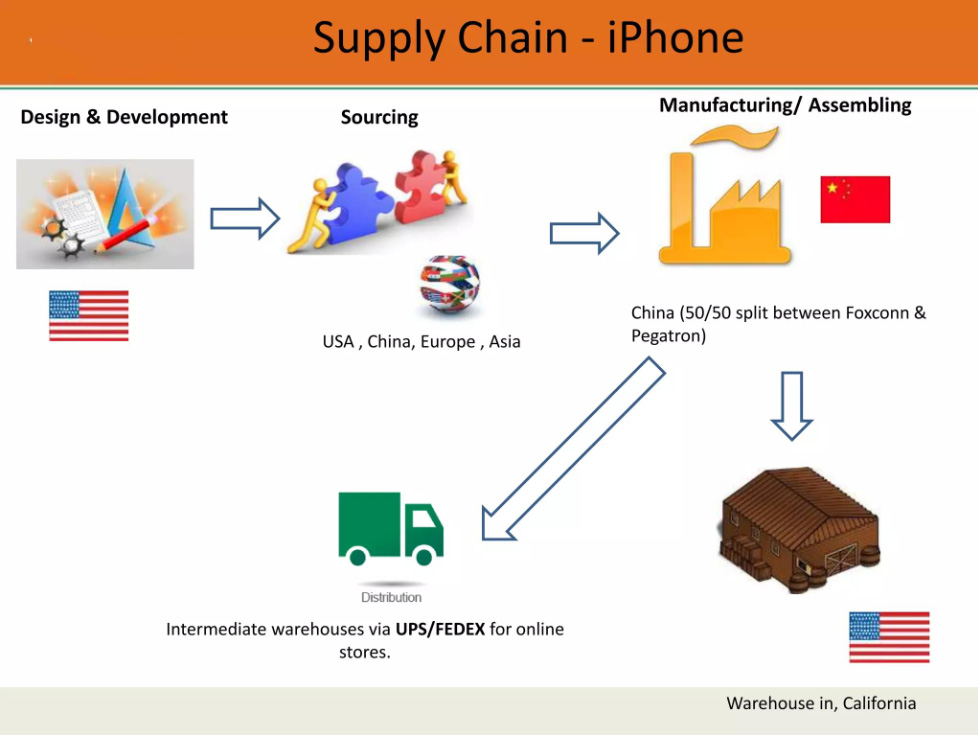
China → USA
could increasingly become:
China → India → USA
or:
China → Vietnam → USA
The final assembly may move.
But Chinese companies may continue supplying:
- Components
- Machinery
- Raw materials
- Tooling
- Semi-finished products
- Production equipment
In other words:
The country of final assembly can change without the source of the supply chain completely changing.
This is one of the most important trends to watch in global trade.
The Future May Not Be “China vs. America”
The bigger transformation may be the emergence of a more fragmented manufacturing network.
Instead of one dominant production center, companies may build multiple manufacturing nodes:
China + India + Vietnam + Mexico + United States + other regional hubs
Each location will serve a different purpose.
Some will specialize in components.
Some in final assembly.
Some in high-value manufacturing.
Some in regional distribution.
Some in strategic production.
This will make global logistics more complicated—but also more important.
The Bottom Line
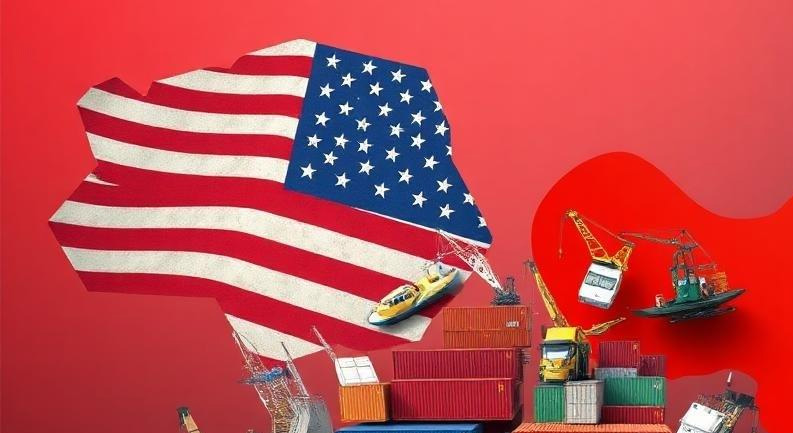
Tariffs can influence corporate decisions.
They can change sourcing strategies.
They can encourage companies to diversify manufacturing.
But tariffs cannot instantly recreate an entire manufacturing ecosystem.
Trump can use tariffs to make companies reconsider where they produce.
But he cannot use tariffs alone to determine where products can be produced most efficiently.
For Apple, the likely future is not simply:
China → America
It is more likely:
China + India + Vietnam + other Asian manufacturing hubs + selective U.S. production
The real future of manufacturing is therefore not the end of globalization.
It is the restructuring of globalization.
And for importers, manufacturers and logistics companies, that may be the bigger story to watch.