
The EU’s new customs rules are starting to show their impact.
Since July 1, 2026, the EU has removed the €150 customs-duty exemption for low-value imports. Small parcels entering the EU are now subject to a temporary €3 customs duty per item category.
Early data from France suggests that imports of small parcels from China have fallen by around 30%–40% since the new rules took effect. Some major Chinese e-commerce platforms have seen even sharper declines.
But the bigger story is not simply about a €3 charge.
The economics of “cheap and direct” are changing.
For low-value products, an additional fixed customs cost can represent a significant percentage of the product value.
A €5 product and a €50 product may both face a €3 charge per applicable item category — making ultra-low-value, high-volume direct shipping much less attractive.
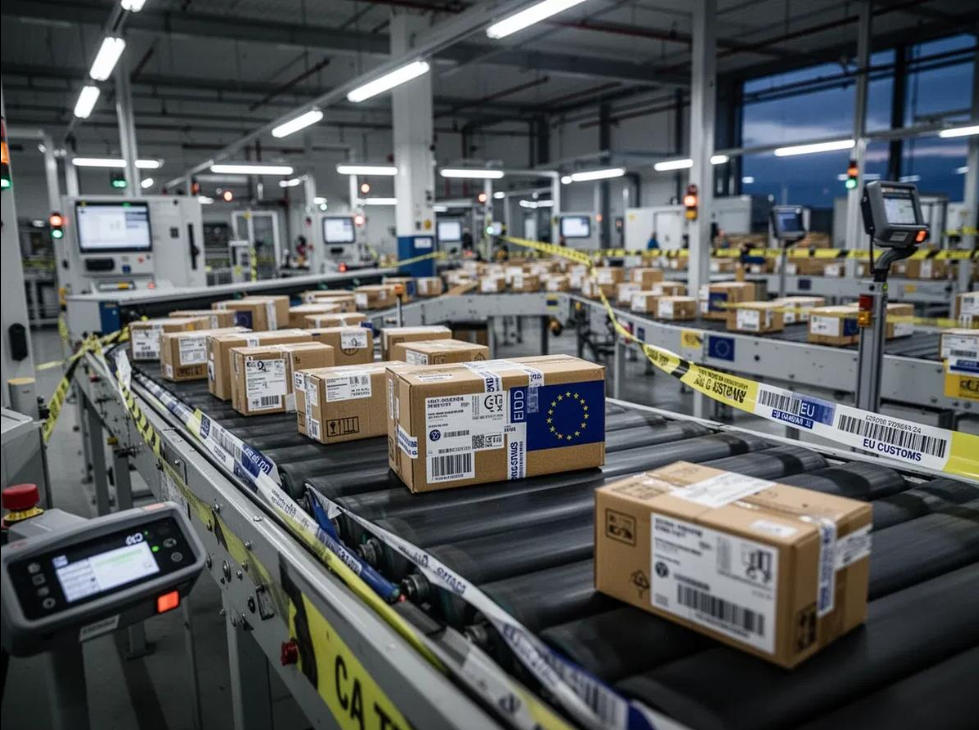
This could accelerate several changes:
- More inventory moving into European warehouses
- Greater use of bulk ocean freight
- Higher average order values
- More consolidation before entering Europe
- Stronger demand for customs-compliant logistics solutions
In other words, the future of China-Europe e-commerce may gradually shift from:
“Ship one cheap item directly to one consumer”
to:
“Move inventory efficiently into Europe, then fulfill locally.”
For logistics providers, this could be a major structural change.
The winners may not simply be the companies offering the cheapest parcel shipping.
They may be the companies that can combine:
Ocean Freight + Customs Clearance + Warehousing + Local Fulfillment
The era of ultra-cheap cross-border parcels is not necessarily over.
But the business model behind it is clearly changing.
The next phase of China-Europe logistics may be about moving inventory smarter — not simply moving parcels cheaper.