
A stronger currency is often considered a challenge for exporters. When the Chinese yuan appreciates against the US dollar, Chinese products can become more expensive for overseas buyers if exporters raise their dollar-denominated prices.
Yet China’s latest trade figures tell a different story.
According to data released by China’s General Administration of Customs on October 14, 2026, China’s goods exports reached RMB 3.03 trillion in September, up 29.6% year on year. Total imports and exports reached RMB 5.16 trillion, marking the first time monthly trade exceeded RMB 5 trillion.
For the first nine months of 2026, China’s total goods trade reached RMB 39.94 trillion, an increase of 18.8% year on year. Exports rose 16.4% to RMB 23.2 trillion.
Meanwhile, the yuan has strengthened against the US dollar, reaching levels not seen since early 2023 in October.
These developments raise an important question: If a stronger yuan can put pressure on export prices, why are China’s exports still growing so quickly?
The answer lies in a combination of global demand, manufacturing competitiveness, changing export products, and how businesses manage currency risk.
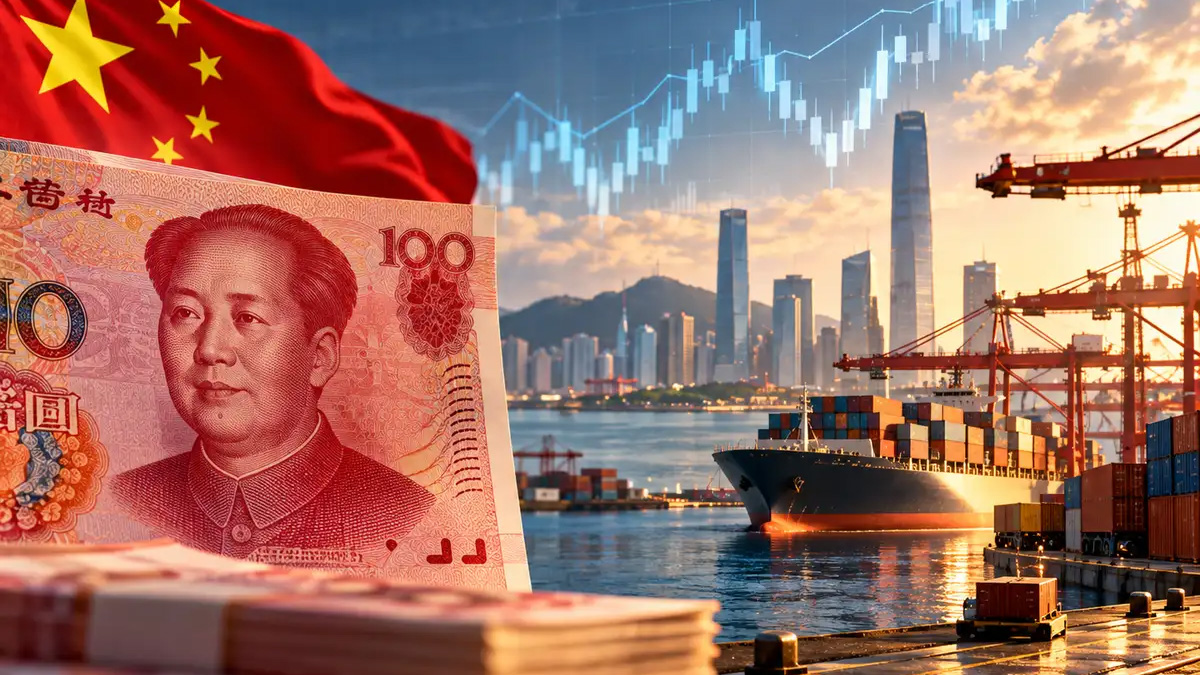
- Global Demand Can Outweigh Currency Headwinds
Exchange rates matter, but they are only one factor influencing international trade.
When overseas buyers need products that are competitively priced, available at scale, and delivered within acceptable lead times, they may continue sourcing from China even as the yuan appreciates.
Recent export growth has been supported by demand for technology-related products, including semiconductors, electronic components, computing equipment, and electrical machinery.
China’s manufacturing ecosystem also allows many exporters to source components, coordinate production, and scale output within established industrial clusters.
For international buyers, switching suppliers is not always straightforward. A new supplier may offer a lower price but lack the required production capacity, quality consistency, or delivery reliability.
As a result, a modest change in exchange rates does not automatically lead buyers to abandon established Chinese suppliers.
However, this does not mean currency appreciation has no effect. Its impact depends on the product category, competitive conditions, and the ability of buyers and sellers to absorb higher costs.
- China’s Export Structure Is Changing
One reason China’s exports have remained resilient is that export growth is increasingly supported by a wider range of manufactured products, including higher-value equipment and technology-related goods.
Customs data for the first three quarters of 2026 showed that trade in industrial robots, electronic components, computer parts, and electrical equipment exceeded RMB 10 trillion, growing 58.9% year on year.
Exports of integrated circuits rose 99.1% over the same period, while exports of electric vehicles, lithium batteries, and wind power generating sets and their parts increased by 72.3%, 36.4%, and 22.4%, respectively.
These figures illustrate an important shift: China’s export performance is not determined solely by low-cost consumer goods.
For some products, technological capability, manufacturing scale, supplier networks, and established production capacity can be just as important as the exchange rate.
This shift does not eliminate price competition. Instead, it means the relationship between currency movements and export performance differs considerably across industries.
- A Stronger Yuan Does Not Affect Every Exporter Equally
Currency appreciation creates different challenges depending on how an exporter earns revenue and pays its expenses.
Consider a Chinese manufacturer that receives payment in US dollars but pays most of its production costs in yuan.
When the yuan strengthens, each dollar of revenue converts into fewer yuan. If the exporter’s dollar selling price remains unchanged, its yuan-denominated revenue may decline.
The company has several possible responses:
- Increase its dollar selling price where market conditions permit.
- Accept a lower profit margin to maintain competitiveness.
- Negotiate better purchasing terms with domestic suppliers.
- Improve productivity and reduce operating costs.
- Use foreign exchange hedging to manage currency exposure.
Each approach involves trade-offs. Raising prices may reduce demand, while accepting lower margins can weaken financial performance over time.
Large exporters with diversified markets, stronger pricing power, or established financial risk-management practices may be better positioned to manage currency movements than smaller businesses with limited margins.
This is why strong national export figures should not be interpreted as evidence that every Chinese exporter is benefiting equally.
- Why Export Growth Does Not Prove That Currency Appreciation Has No Impact
There is an important distinction between a country’s aggregate export performance and the financial performance of individual exporters.
National export statistics measure the value of goods traded. They do not directly show how much profit exporters earn, how many units they sell, or whether their margins have improved.
Export values can change because of several factors:
- The quantity of goods shipped
- Changes in product prices
- Shifts toward higher-value products
- Changes in the composition of export markets
- Currency conversion and statistical measurement
For example, a manufacturer could export more units but earn less profit per unit because of higher production costs and an unfavorable exchange rate.
Another manufacturer could maintain its export volume by raising prices, while a third might lose orders to competitors.
Therefore, strong export growth alongside a stronger yuan demonstrates that other forces are supporting trade. It does not establish that the exchange rate has become irrelevant.
The more useful question is whether exporters can maintain orders and profitability as currency movements continue.
- What Does This Mean for US and European Importers?
For overseas buyers, a stronger yuan does not necessarily mean every product from China will immediately become more expensive.
The final price depends on how suppliers quote, the currency used for settlement, the timing of payment, production costs, and the competitive conditions of the particular market.
Importers should consider three practical implications.
Review Supplier Quotes and Currency Terms
Ask whether a quotation is fixed in US dollars or denominated in yuan. Clarify its validity period and whether the supplier can revise the price following significant exchange-rate changes.
A fixed dollar quote may provide short-term price certainty, but the supplier may build currency risk into its pricing or adjust the quote when it expires.
Evaluate Total Landed Cost
The product price is only one part of the total import cost.
Buyers should also account for international freight, customs clearance, applicable import duties and taxes, insurance where relevant, destination handling, and final delivery.
A lower factory price does not necessarily result in a lower landed cost.
Plan Procurement and Shipping Together
Currency movements, production lead times, freight rates, and port conditions can change independently.
Importers should coordinate purchasing schedules with production readiness and shipping arrangements rather than relying on exchange-rate movements alone to determine when to place an order.
For businesses importing furniture, kitchenware, building materials, machinery, or other manufactured products, a structured purchasing and logistics plan can make budgeting more predictable.
- What This Means for China-to-USA Shipping
Strong export activity can support demand for international freight, but the relationship is not automatic.
Shipping demand depends on which products are growing, where they are being sold, the size and frequency of orders, inventory strategies, and the availability of transportation capacity.
A surge in high-value electronic components, for example, may have different logistics requirements from an increase in furniture or household goods shipments.
Trade policy also matters. Tariffs, product-specific regulations, customs requirements, and changes in sourcing strategies can influence which routes importers use and how they organize their supply chains.
For businesses shipping from China to the United States, the practical priority is to monitor the complete cost of importing—not simply the yuan-dollar exchange rate or the headline ocean freight rate.
That means evaluating supplier pricing, shipment volume, FCL or LCL options, customs requirements, destination charges, and final delivery arrangements together.
Final Thoughts: China’s Export Strength Is About More Than the Exchange Rate
China’s export growth in 2026 demonstrates that currency movements alone cannot explain the direction of international trade.
Strong overseas demand, manufacturing capabilities, changing product structures, and business adaptation can all help exporters maintain momentum when exchange rates move against them.
At the same time, a stronger yuan can still put pressure on exporter margins and influence future pricing decisions. The impact will vary by industry, company, and destination market.
For global importers, the lesson is straightforward: do not base sourcing decisions on exchange rates alone. Evaluate supplier competitiveness, product quality, total landed cost, regulatory requirements, and logistics reliability together.