
When importing building materials from China, the purchase price is only the beginning.
A supplier may offer an attractive price for tiles, stone, flooring, sanitary ware, aluminum profiles, or other construction materials. But once international freight, import duties, customs clearance, and inland transportation are included, the actual cost can look very different.
This is why experienced importers don’t make purchasing decisions based on product prices or ocean freight quotations alone.
They calculate the landed cost — the total cost of getting imported goods from the supplier in China to their final destination.
Understanding this number helps you set selling prices, protect profit margins, compare suppliers, and avoid unexpected expenses.
In this guide, we’ll explain how to calculate the landed cost of building materials and provide a practical cost breakdown you can use for your next shipment.
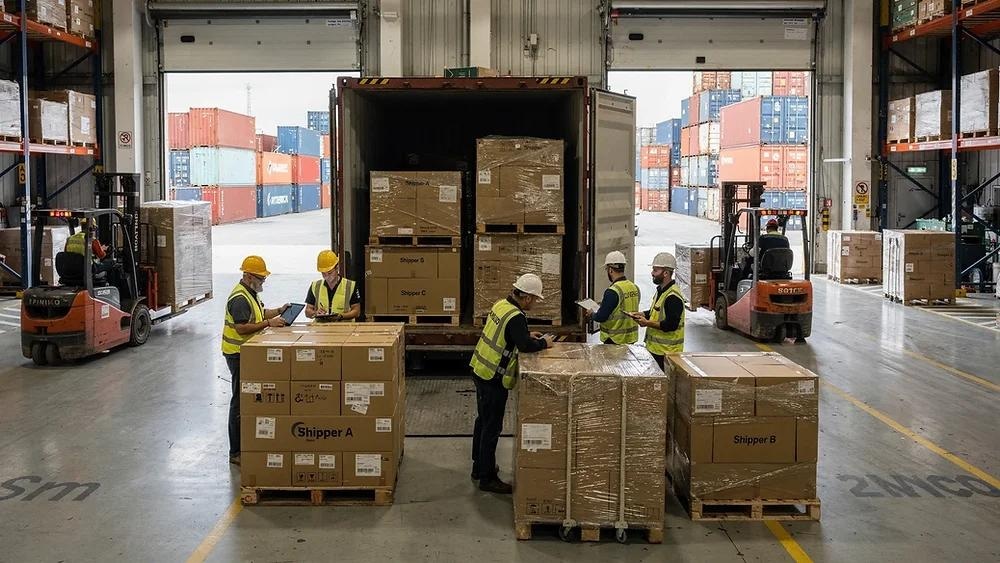
- What Is Landed Cost?
Landed cost is the total expense associated with purchasing, importing, and delivering goods to a specified destination.
For building materials imported from China, the main cost components typically include:
- Product purchase price
- Domestic transportation and export handling in China
- International shipping
- Import duties and applicable taxes
- Customs clearance and destination charges
- Inland transportation to your warehouse or project site
- Other applicable costs, such as insurance, inspection, or special handling
The exact components depend on the shipping terms, destination country, product category, and how the transaction is structured.
The important point is that a low factory price does not necessarily mean a low landed cost.
- The Six Main Components of Building Material Import Costs
Cost 1: Product Purchase Price
This is the amount paid to the manufacturer or supplier.
For building materials, product pricing may depend on:
- Material type and grade
- Thickness, dimensions, and specifications
- Surface treatment and finishing
- Packaging requirements
- Order quantity
- Customization and production requirements
For example, two suppliers may quote different prices for porcelain tiles. However, differences in thickness, water absorption, finish, quality standards, or packaging can affect both the purchase price and the final shipping cost.
When comparing quotations, make sure you are comparing equivalent products and specifications.
Cost 2: Domestic Transportation and Export Handling in China
Before goods leave China, they may need to be transported from the factory to a consolidation warehouse, container yard, or export port.
Potential charges include:
- Factory pickup
- Domestic trucking
- Warehouse receiving and handling
- Cargo consolidation
- Export documentation
- Loading and container stuffing
- Special handling for oversized or heavy cargo
This stage is particularly important for building materials.
Tiles, stone slabs, metal profiles, and sanitary ware can be heavy, fragile, bulky, or difficult to handle. Packaging, palletization, loading methods, and transportation arrangements may significantly affect the cost.
If you purchase from multiple suppliers, remember to include the cost of collecting and consolidating cargo from different factories.
Cost 3: International Transportation
International freight is often one of the largest logistics expenses for building materials.
Depending on the cargo volume, weight, destination, and delivery requirements, importers may choose:
- FCL (Full Container Load)
- LCL (Less than Container Load)
- Other suitable transport arrangements for oversized or specialized cargo
For heavy building materials, FCL is often worth evaluating because cargo weight can become a limiting factor before container space is fully utilized.
However, LCL may be suitable for smaller orders or mixed shipments.
When comparing shipping quotations, check what is actually included.
For example, a freight quotation may cover ocean transportation but exclude:
- Origin handling
- Documentation fees
- Destination terminal handling
- Customs clearance
- Port-related charges
- Final delivery
A lower ocean freight rate does not automatically mean a lower total transportation cost.
Cost 4: Import Duties and Taxes
Import duties and taxes can have a substantial impact on the final cost of building materials.
The amount depends on several factors:
- Product classification and HS code
- Country of origin
- Destination country’s tariff schedule
- Customs valuation
- Applicable trade measures or additional duties
- Product-specific taxes or fees
Different building materials may have very different duty treatments.
For example, ceramic tiles, natural stone, aluminum profiles, steel products, and sanitary ware should not be assumed to have the same import duty rate.
For US imports, applicable duties may include the ordinary customs duty and additional trade-related duties where relevant. Other taxes and fees may also apply.
For Canadian imports, the applicable tariff treatment and GST/HST implications need to be evaluated according to the product and import circumstances.
Important: Never estimate duties using a generic rate for all building materials. Verify the correct tariff classification and current destination-country requirements before placing an order.
Customs valuation may also include certain costs or adjustments beyond the supplier’s invoice price, depending on the applicable rules.
Cost 5: Customs Clearance and Destination Charges
Once the cargo arrives at the destination country, additional charges may apply before it can be released and delivered.
These may include:
- Customs broker service fees
- Customs examination charges, if applicable
- Terminal handling charges
- Port or container-related fees
- Documentation and administrative charges
- Storage or demurrage if delays occur
For building materials, the potential cost of delays deserves particular attention.
If a container of tiles or stone is held at the port, additional charges can accumulate while the importer waits for clearance or delivery arrangements.
Preparing accurate documentation and confirming import requirements before shipment can help reduce avoidable delays.
Cost 6: Inland Transportation to the Final Destination
The final stage is moving the cargo from the destination port or terminal to the importer’s warehouse, distribution center, or construction site.
This cost can vary considerably depending on:
- Delivery distance
- Cargo weight and dimensions
- Truck type and capacity
- Container delivery requirements
- Unloading arrangements
- Appointment or site-access restrictions
- Special equipment requirements
Building materials are often heavy, so the delivery method must be suitable for the cargo.
For example, delivering a container of ceramic tiles to a commercial warehouse is different from delivering stone slabs or long aluminum profiles to a construction site.
Before shipping, confirm whether the destination can accommodate the container, whether unloading equipment is available, and whether additional labor or specialized transportation is required.
- How to Calculate the Landed Cost
The calculation is straightforward once all cost components have been identified.
Landed Cost = Product Cost + Origin Charges + International Freight + Import Duties and Taxes + Destination Charges + Inland Delivery + Other Applicable Costs
To calculate the landed cost per unit:
Landed Cost per Unit = Total Landed Cost ÷ Total Number of Units
The unit could be a tile, square meter, piece, ton, pallet, or other suitable measurement.
For building materials, choosing the right unit is essential.
For example:
- Tiles: cost per square meter
- Stone slabs: cost per slab or square meter
- Flooring: cost per square meter
- Aluminum profiles: cost per meter or ton
- Sanitary ware: cost per piece
- Steel products: cost per ton
Use the unit that matches how you sell, price, or consume the material.
- Practical Example: Importing Ceramic Tiles from China
Let’s consider a hypothetical shipment of ceramic tiles imported from China.
Assume an importer purchases 1,000 square meters of tiles and arranges delivery to a warehouse in the United States.
The following figures are illustrative only. They are not current market quotations, tariff rates, or a duty estimate for a specific product.
| Cost Component | Estimated Cost (USD) |
| Product purchase | $8,000 |
| China domestic transportation and export handling | $500 |
| International freight | $2,000 |
| Import duties and applicable taxes | $1,200 |
| Customs clearance and destination charges | $600 |
| Inland transportation | $700 |
| Total Landed Cost | $13,000 |
The total landed cost is $13,000.
The shipment contains 1,000 square meters of tiles.
Therefore:
Landed Cost per Square Meter = $13,000 ÷ 1,000 = $13.00
<escape> </escape>
The supplier’s product price was only $8.00 per square meter, but the actual landed cost is $13.00 per square meter.
That is a difference of $5.00 per square meter.
If the importer calculates its selling price using only the factory purchase price, the business may significantly underestimate its actual costs.
- A Building Material Landed Cost Worksheet
You can use the following table to estimate the total cost of your next import shipment.
| Cost Item | Estimated Amount (USD) |
| Product purchase price | $ |
| Factory pickup / domestic trucking | $ |
| Warehouse / consolidation | $ |
| Export handling and documentation | $ |
| International freight | $ |
| Cargo insurance | $ |
| Import duties | $ |
| Applicable import taxes and fees | $ |
| Customs clearance | $ |
| Destination port and terminal charges | $ |
| Inland transportation | $ |
| Unloading / special handling | $ |
| Other applicable costs | $ |
| Total Landed Cost | $ |
To get the landed cost per unit, divide the total by the quantity purchased.
For more accurate cost allocation, shipments containing multiple products should allocate shared transportation and handling expenses using a reasonable basis, such as weight, volume, value, or the actual service consumed.
For heavy building materials, weight and handling requirements may be particularly important.
- Five Common Mistakes When Calculating Landed Cost
Mistake 1: Comparing Only Factory Prices
A supplier offering a lower price may not offer the lowest overall cost.
Product specifications, packaging, order quantity, and domestic transportation all matter.
Compare the full cost, not just the unit price.
Mistake 2: Using an Inaccurate Duty Estimate
Different building materials can fall under different tariff classifications.
An incorrect HS code or outdated duty estimate can lead to unexpected expenses.
Check the applicable tariff treatment before finalizing your purchase.
Mistake 3: Ignoring Cargo Weight and Container Limits
Building materials are often dense and heavy.
A container may reach its permissible weight limit before all available space is used.
This can affect loading plans, transportation costs, and delivery arrangements.
Mistake 4: Forgetting Destination Charges
Some importers compare ocean freight quotations without considering destination handling, customs clearance, and final delivery.
These charges can make a significant difference to the total logistics budget.
Mistake 5: Ignoring Unloading and Delivery Conditions
A shipment delivered to a warehouse with suitable unloading equipment may have a very different cost from one delivered to a restricted construction site.
Always confirm the final delivery conditions before arranging transportation.
- How to Reduce the Landed Cost of Building Materials
Reducing landed cost does not necessarily mean negotiating a lower ocean freight rate.
There are several practical ways to improve the overall cost structure.
Consolidate cargo from multiple suppliers
If you purchase from several factories in China, coordinating deliveries to one warehouse may reduce duplicated pickup and export handling costs. Compare the consolidation cost against shipping each order separately.
Optimize packaging and loading
Suitable packaging protects fragile materials while improving container utilization. For tiles and stone, proper palletization, edge protection, moisture prevention, and secure loading are particularly important.
Choose the right shipping method
Compare FCL and LCL based on the full cost, cargo weight, volume, destination charges, and delivery requirements.
Plan shipments earlier
Last-minute shipping arrangements can limit your options and create avoidable expenses. Early planning gives you more time to compare routes, coordinate suppliers, and arrange delivery.
Review import requirements before production is completed
Confirm classification, applicable duties, taxes, and product-specific regulations early. This helps reduce the risk of unexpected costs after the cargo arrives.
Final Thoughts: The Cheapest Freight Is Not Always the Cheapest Shipment
When importing building materials from China, the purchase price and ocean freight rate are only two parts of the equation.
The real number that matters is the total landed cost.
Whether you import ceramic tiles, natural stone, flooring, aluminum profiles, sanitary ware, or other construction materials, understanding every cost component helps you make better purchasing decisions and protect your profit margins.
At TD Logistics, we help importers coordinate cargo pickup in China, warehouse consolidation, FCL and LCL shipping, customs clearance arrangements, and door-to-door delivery.
Our goal is to help businesses look beyond the ocean freight rate and plan the entire transportation process more effectively.
Before requesting your next shipping quotation, prepare your cargo weight, dimensions, quantity, product details, and final delivery location.
Know your landed cost before your cargo leaves China.