
When importers experience delays, unexpected costs, or cargo holds, the first assumption is usually straightforward:
Something went wrong during transportation.
Common reactions include:
- The vessel was delayed
- The port was congested
- The truck arrived late
- The freight forwarder made a mistake
While transportation issues do occur in global logistics, they are often not the root cause of most serious shipping disruptions.
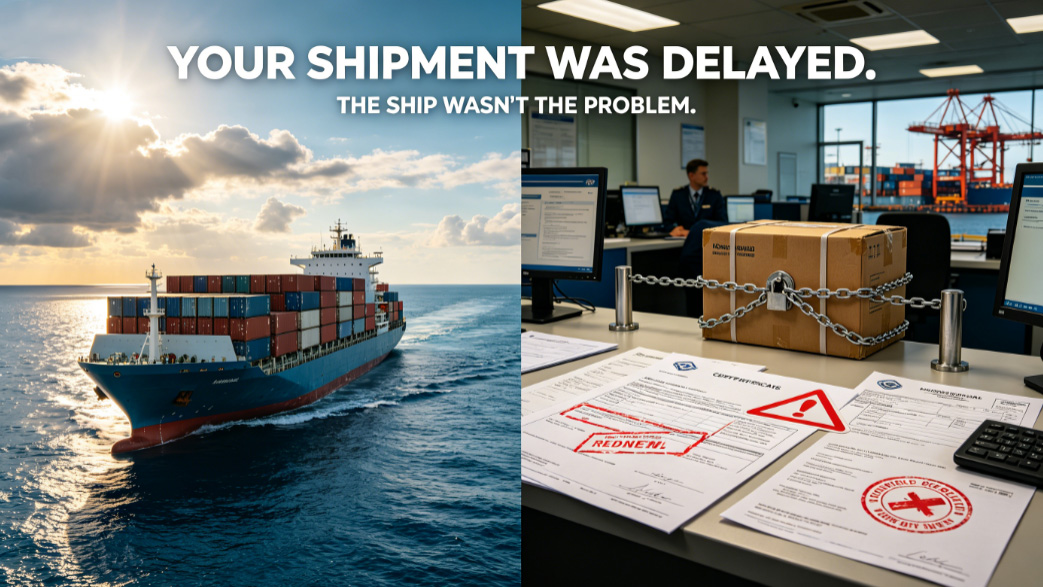
In many cases, the biggest shipping problem is not shipping itself.
It is everything that happens before the cargo even moves.
The Misconception About Shipping Problems
Most importers view logistics as a transportation issue:
Buy goods → ship goods → deliver goods
From this perspective, any delay must be caused by the physical movement of cargo.
However, international shipping is not a simple transport function. It is a regulated process involving documentation, compliance, customs rules, packaging standards, and risk controls.
This means many “shipping problems” are actually created long before the shipment reaches a vessel or aircraft.
Where Most Shipping Problems Actually Start
1. Documentation Errors
One of the most common causes of shipment delays is incorrect or incomplete documentation.
This may include:
- Inconsistent invoice descriptions
- Missing packing list details
- Incorrect HS codes
- Missing shipment references
- Mismatched declared values
Even small discrepancies can trigger additional review or customs questions.
2. Compliance Issues
Many products require specific approvals before they can be exported or imported.
Common examples include:
- Products with lithium batteries
- Food and agricultural goods
- Cosmetics and personal care items
- Medical-related products
- Branded or trademarked goods
If compliance requirements are not identified early, shipments can be delayed or stopped entirely.
3. Incorrect Product Descriptions
Vague or inaccurate descriptions can cause customs concerns.
For example:
- “Parts” instead of specifying the actual product
- “Samples” without clear classification
- Generic descriptions that do not match the actual cargo
Customs authorities rely heavily on clear product identification to assess risk and duty classification.
4. Packaging and Loading Issues
Not all shipping problems are related to documentation.
Poor packaging can also create delays and additional costs due to:
- Damaged goods requiring inspection
- Unstable pallet configurations
- Inefficient container loading
- Overweight or oversized shipments
In some cases, cargo must be reworked before it is allowed to continue transit.
5. Late Freight Planning
Many importers only begin arranging logistics after production is completed.
At that stage:
- Vessel space may already be limited
- Freight rates may have increased
- Transit schedules may be restricted
- Booking options may be reduced
The result is not a transportation failure, but a planning delay.
6. Customs and Regulatory Requirements
Customs authorities are not part of the shipping company, but they directly impact whether cargo can move.
Delays often occur due to:
- Risk-based inspections
- Value verification
- Intellectual property checks
- Regulatory documentation reviews
These processes are part of international trade enforcement, not shipping errors.
Why This Matters for Importers
Understanding the real source of shipping problems changes how businesses approach logistics.
Instead of reacting to delays, experienced importers focus on prevention by managing:
- Documentation accuracy
- Product compliance
- Packaging standards
- Early freight planning
- Regulatory requirements
This reduces uncertainty and improves supply chain reliability.
The Real Cost of “Pre-Shipping” Problems
When issues occur before shipment, the consequences often extend beyond simple delays:
- Missed sales seasons
- Increased storage costs
- Production interruptions
- Emergency freight expenses
- Customer dissatisfaction
- Inventory shortages
In many cases, these costs are significantly higher than the actual freight cost itself.
Rethinking What “Shipping Problems” Really Mean
In traditional thinking, shipping problems are associated with transportation delays.
But in modern international logistics, most disruptions originate earlier in the process.
The vessel may operate normally.
The container may be available.
The freight network may function correctly.
Yet the shipment still fails to move on time.
Because the real issue was never transportation.
It was preparation.
Final Thoughts
The biggest shipping problem is often not shipping.
It is the combination of decisions made before the cargo ever enters the logistics system.
Successful importing depends less on reacting to transportation issues and more on preventing upstream problems.
Because in global trade, the smoothest shipments are rarely the result of luck.
They are the result of preparation.