
Recent statements from Donald Trump suggest the possibility of imposing significant tariffs—reportedly up to 50%—on countries involved in supplying weapons to Iran. While no formal policy has been implemented at this stage, the proposal reflects a broader trend: the increasing intersection of geopolitics and global trade.
For freight forwarders, importers, and exporters, the key question is not whether such a policy will be enacted immediately, but how the possibility itself may influence logistics planning, pricing, and risk management.
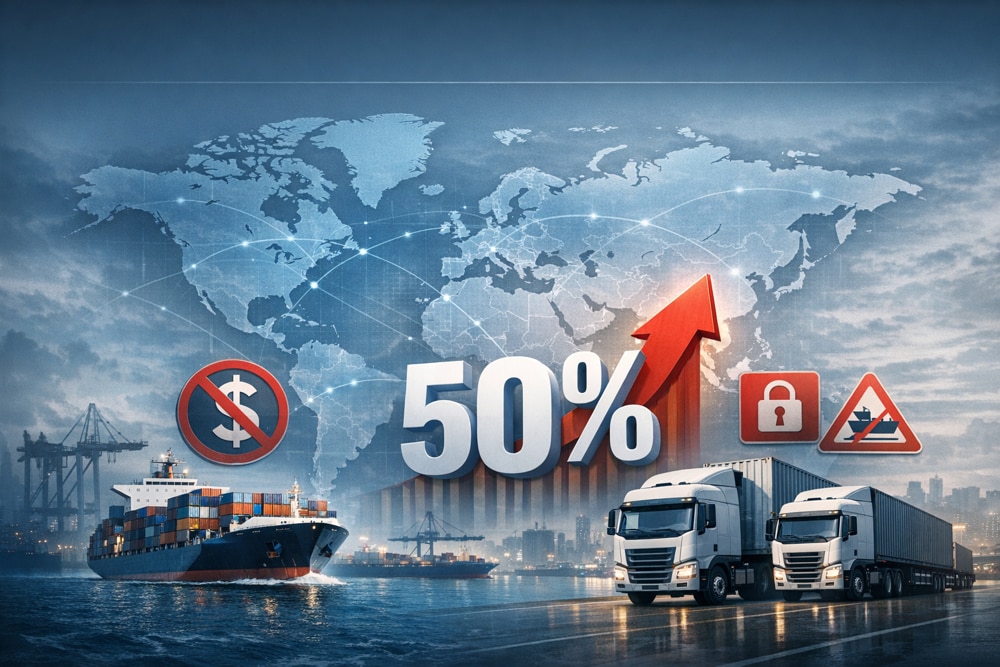
- Policy Context: Trade Measures as Strategic Tools
Historically, the United States has used a combination of sanctions, export controls, and tariffs to influence geopolitical outcomes. Measures targeting third countries—often referred to as “secondary sanctions”—are not new.
If implemented, a tariff policy tied to Iran-related activities would likely aim to:
- Discourage military or strategic cooperation with Iran
- Increase economic pressure without direct escalation
- Influence global supply chain decisions
However, applying broad tariffs—especially at a high rate—would require clear legal, political, and economic justification, and could face practical constraints.
- Likelihood and Scope: Broad vs. Targeted Measures
From a neutral perspective, two implementation paths are possible:
- Broad Tariff Measures
- Applied at the country level
- Significant impact on trade flows
- Higher economic and political cost
- Targeted Restrictions (More Likely)
- Focused on specific companies, sectors, or transactions
- Easier to enforce and justify
- Lower systemic disruption
In most recent cases, targeted measures have been preferred due to their precision and reduced collateral impact on domestic markets.
- Implications for the Freight Industry
Even without immediate policy implementation, the expectation of change can influence logistics dynamics.
- Shipment Timing Volatility
- Some importers may accelerate shipments to mitigate potential tariff risks
- Others may delay decisions pending policy clarity
This can result in irregular cargo volumes, with short-term spikes followed by slowdowns.
- Freight Rate Fluctuations
- Increased demand during “front-loading” periods may tighten capacity
- Reduced demand during uncertainty phases may soften rates
Forwarders should expect less stable pricing cycles.
- Inland Transportation Cost Pressure
The broader context of rising global oil prices—partly linked to tensions in the Middle East—has already led to higher fuel costs.
Even in markets with price controls, such as China, logistics providers are experiencing:
- Gradual increases in trucking rates
- Adjustments in fuel-related surcharges
- Route and Transit Risk
Key shipping lanes, particularly the Strait of Hormuz, remain sensitive to geopolitical developments.
Potential risks include:
- Temporary rerouting
- Increased insurance premiums
- Extended transit times
- Compliance and Due Diligence
If policies expand to include enforcement mechanisms, forwarders may face:
- Increased scrutiny on cargo origin and destination
- Enhanced screening requirements for clients and transactions
- Potential exposure to secondary sanctions
Compliance processes may need to be strengthened accordingly.
- Strategic Considerations for Forwarders
In a policy environment characterized by uncertainty, freight forwarders can focus on adaptability:
- Flexible Pricing Models: Incorporate fuel and policy adjustment clauses
- Shorter Quotation Validity: Reflect rapid market changes
- Proactive Communication: Keep clients informed of risks and timing considerations
- Diversified Carrier Networks: Maintain access to alternative capacity
- Conclusion
While the proposed tariff measures remain speculative, they highlight an important shift:
Global trade is increasingly influenced by geopolitical considerations, and logistics planning must adapt accordingly.
For freight forwarders, the challenge is not only to respond to confirmed policy changes, but also to manage uncertainty, maintain flexibility, and guide clients through evolving risk conditions.