
When sourcing products internationally, receiving a sample is often an exciting moment.
The sample arrives, and everything looks perfect:
- The quality feels great
- The color matches expectations
- The packaging looks professional
- The finishing details are exactly right
At this stage, many buyers feel confident and quickly move forward with a large order.
However, one of the most common lessons experienced importers learn is this:
A perfect sample does not guarantee a perfect shipment.
The product you approve as a sample and the products you receive in bulk can sometimes be very different.
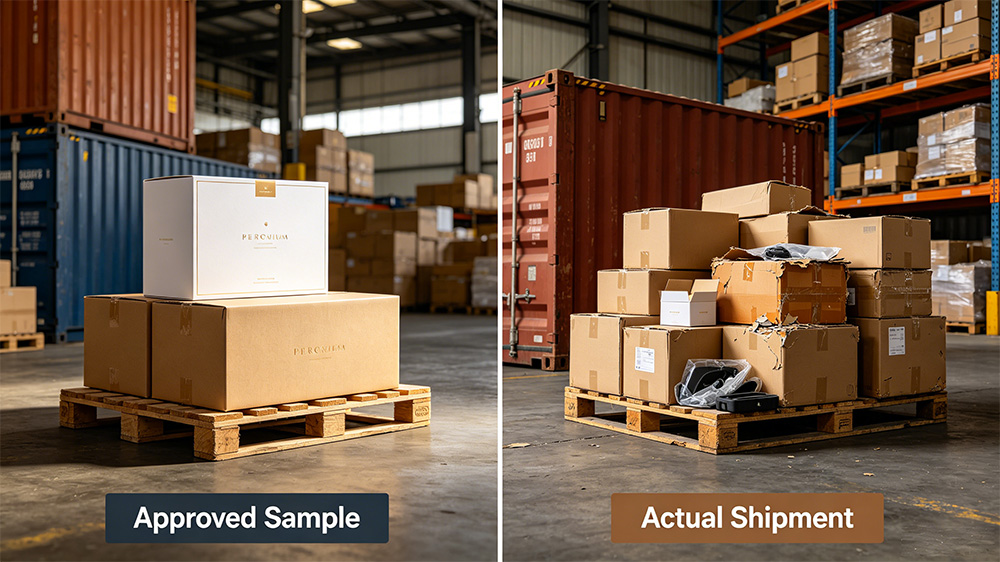
Why Does This Happen?
A sample is usually produced under controlled conditions.
Suppliers often spend extra attention on samples because they know first impressions matter. More care may be given to material selection, assembly, finishing, and packaging.
Mass production works differently.
Once hundreds or thousands of units enter production, many variables begin affecting the final result.
Common factors include:
Changes in raw materials
Material shortages or price fluctuations may cause factories to switch suppliers or use alternative materials.
Even a small change can affect:
- Product durability
- Texture
- Color
- Weight
- Appearance
Different production batches
The first production run may not be identical to later batches.
Slight differences can appear in:
- Paint color
- Surface finishing
- Printing quality
- Product dimensions
Multiple workers or production lines
The sample may be assembled by experienced staff, while large production orders are completed by different teams.
This can create variations in consistency and workmanship.
Cost reduction during production
In some situations, suppliers may attempt to reduce manufacturing costs by changing:
- Packaging materials
- Internal components
- Accessories
- Product thickness
- Protective materials
These changes may appear minor individually but become significant when multiplied across a large order.
Small Differences Become Large Problems
One imperfect product may not seem serious.
But imagine receiving:
- 1,000 dining sets
- 5,000 kitchen tools
- 10,000 electronic accessories
If every item is only slightly different from the approved sample, the impact grows quickly.
Potential consequences include:
- Customer complaints
- Product returns
- Negative reviews
- Delayed sales
- Higher operating costs
- Damage to brand reputation
Sometimes products are not bad enough to reject completely, but they are inconsistent enough to create ongoing problems.
Those situations are often the most difficult to manage.
What Experienced Importers Do Differently
Experienced importers rarely rely only on sample approval.
Instead, they create systems to ensure production remains consistent.
Common practices include:
Create detailed product specifications
Document everything clearly:
- Materials
- Dimensions
- Weight
- Colors
- Packaging requirements
- Accessories
- Labeling details
The more details documented, the less room there is for misunderstanding.
Conduct pre-production confirmation
Before mass production starts, confirm that the factory understands every requirement.
Arrange quality inspections
Pre-shipment inspections can identify problems before goods leave the factory.
Inspection teams often check:
- Product appearance
- Quantity
- Packaging
- Functional performance
- Random samples from production batches
Request production photos and updates
Regular updates during production can reveal issues before they become expensive problems.