
The first half of 2026 has been marked by one of the strongest freight rate recoveries in recent years.
From April to July, Trans-Pacific container rates experienced multiple rounds of increases, pushing major U.S.-bound routes to levels not seen since previous peak shipping cycles.
Rate Movement Overview
In early April, average market levels were approximately:
- U.S. West Coast: USD 2,500–3,100/FEU
- U.S. East Coast: USD 3,500–4,100/FEU
- U.S. Gulf: USD 3,500–4,100/FEU
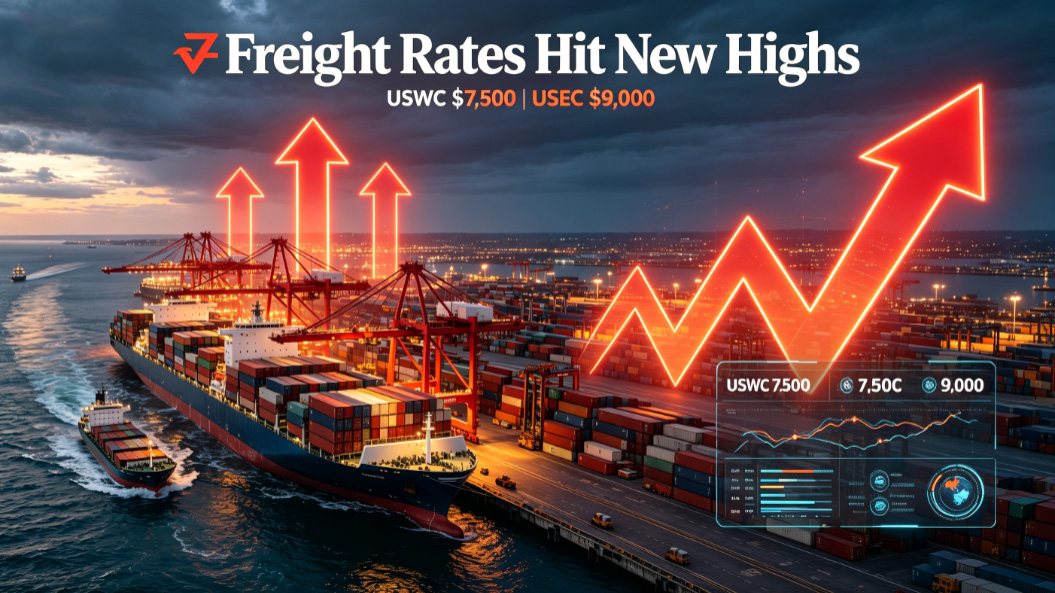
By early July, rates had climbed to:
- U.S. West Coast: USD 7,500/FEU
- U.S. East Coast: USD 9,000/FEU
- U.S. Gulf: USD 9,100/FEU
This represents increases of more than 100% on several major trade lanes within just a few months.
What Drove the Market?
Several factors contributed to the sharp rise:
1. Strong Trans-Pacific Demand
Importers accelerated shipments to replenish inventories and prepare for the second half of the year, creating sustained demand across U.S.-bound routes.
2. Carrier Capacity Management
Shipping lines carefully managed available capacity through service adjustments and vessel deployment strategies, helping maintain pricing discipline.
3. Peak Season Arrived Early
Many importers moved shipments forward to avoid future uncertainty, causing peak-season demand to arrive earlier than usual.
4. Inland Transportation Pressure
Rail and inland transportation costs remained elevated, contributing to higher IPI and inland destination pricing.
Key Market Trends
The most notable trend of the first half was the speed of rate increases.
Several rounds of General Rate Increases (GRIs) were successfully implemented, with some periods seeing increases of more than USD 1,000 per FEU within a single adjustment cycle.
East Coast and Gulf routes generally experienced larger increases than West Coast services, reflecting stronger demand and tighter capacity conditions.
Looking Ahead
As the industry enters the traditional peak shipping season, market participants will be watching:
- Space availability
- Carrier capacity deployment
- Inventory replenishment activity
- Future trade policy developments
While freight markets can change quickly, the first half of 2026 demonstrated that supply-demand balance remains the primary driver of container shipping rates.
For importers and exporters, early planning and flexible logistics strategies continue to be essential in managing transportation costs and securing cargo space.
— TD Logistics
Your Reliable China-to-USA & Canada Shipping Partner