
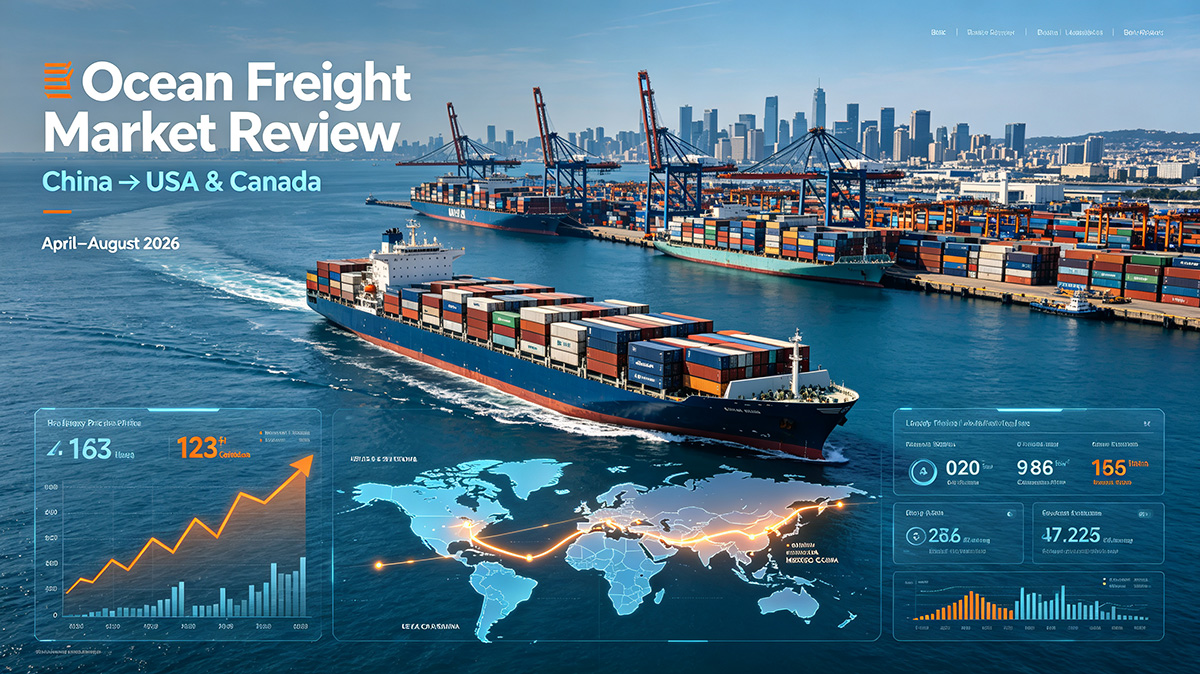
The first half of 2026 has been one of the most dynamic periods for the Trans-Pacific shipping market in recent years. After a relatively stable first quarter, ocean freight rates began climbing rapidly from April, reaching new highs by August.
For importers shipping from China to the United States and Canada, understanding what happened—and what may happen next—is essential for controlling logistics costs and planning future shipments.
A Quick Look at the Market
Between April and early August, major trade lanes experienced significant increases.
Approximate market movements:
| Route | Early April | Early August |
| U.S. West Coast | USD 2,500–3,100/FEU | USD 7,300/FEU |
| U.S. East Coast | USD 3,500–4,100/FEU | USD 10,500/FEU |
| U.S. Gulf | USD 3,500–4,100/FEU | USD 10,600/FEU |
Within just four months, some routes more than doubled in price.
Although there were brief corrections in July, carriers quickly announced another round of rate restoration for August, pushing prices higher once again.
What Drove the Rate Increases?
- Peak Season Demand
As summer approached, retailers, wholesalers, and e-commerce businesses accelerated imports to prepare for back-to-school sales, holiday inventory, and year-end demand.
This seasonal increase significantly boosted booking volumes across Trans-Pacific services.
- Carrier Capacity Management
Shipping lines carefully managed vessel capacity by adjusting sailing schedules and allocating space strategically.
Rather than allowing rates to decline after short-term corrections, many carriers introduced new FAK levels to restore market pricing.
This explains why August rates rebounded so quickly after the July adjustment.
- Market Confidence Returned
Unlike temporary price spikes caused by isolated events, this year’s increases have been supported by broad participation from multiple major carriers.
When companies such as COSCO, CMA CGM, and others announce similar pricing levels, it often indicates that the market has established a new pricing benchmark.
- East Coast Continues to Outperform
One of the most noticeable trends throughout 2026 has been the strength of U.S. East Coast and Gulf routes.
While West Coast rates experienced several corrections, East Coast pricing remained relatively firm and even reached new highs.
Possible reasons include:
- Continued strong import demand
- Longer transit routes with higher operating costs
- Stable vessel utilization
- Strong inland distribution demand
- Inland Transportation Remains Expensive
Ocean freight is only part of the total logistics cost.
Rail transportation to inland destinations such as Chicago, Dallas, Memphis, and other distribution hubs has remained expensive, keeping IPI rates elevated throughout the season.
Is This Another Pandemic-Level Market?
Not necessarily.
Today’s market is fundamentally different from the extreme conditions seen during 2021–2022.
Current price increases are primarily driven by:
- Seasonal demand
- Carrier pricing strategies
- Capacity management
- Inventory replenishment
Rather than widespread port congestion or severe supply chain disruptions.
What Should Importers Do?
In a volatile freight market, waiting for rates to fall can be risky.
Instead, importers should focus on improving shipping flexibility and planning ahead.
Recommended actions include:
- Book shipments earlier whenever possible.
- Compare multiple carrier options instead of relying on a single service.
- Monitor freight market updates regularly.
- Plan inventory based on sales forecasts rather than reacting to freight rate changes.
- Work with an experienced freight forwarder who can identify alternative sailings and promotional space when available.
Looking Ahead
The latest August rate restoration demonstrates that carriers remain committed to maintaining higher pricing levels.
Whether these rates can be sustained will depend on several factors over the coming months:
- Peak-season cargo demand
- Vessel capacity deployment
- Port efficiency
- Carrier competition
- Global trade policies
Although short-term fluctuations are expected, freight rates are likely to remain above first-quarter levels for the near future.
Final Thoughts
The 2026 ocean freight market reminds us that shipping costs can change rapidly.
For importers, success is no longer just about finding the lowest freight rate. It is about securing reliable capacity, understanding market trends, and making informed logistics decisions.
At TD Logistics, we monitor market developments daily and help our customers find the most competitive routing, carrier, and pricing options based on real-time conditions.
Whether you’re shipping to the United States or Canada, staying informed—and planning ahead—remains the best strategy in today’s freight market.